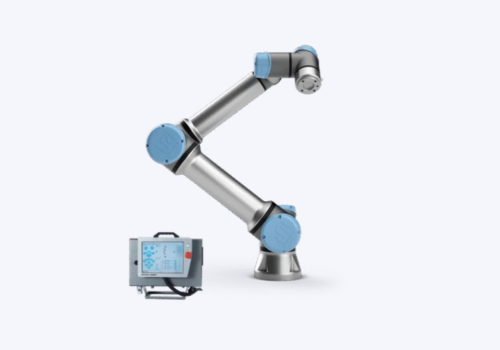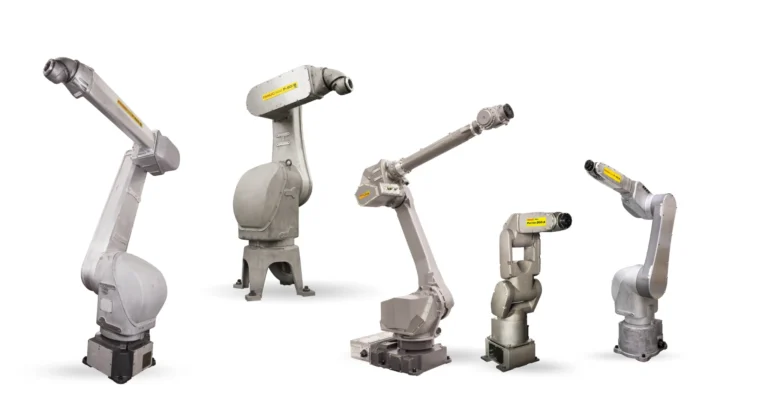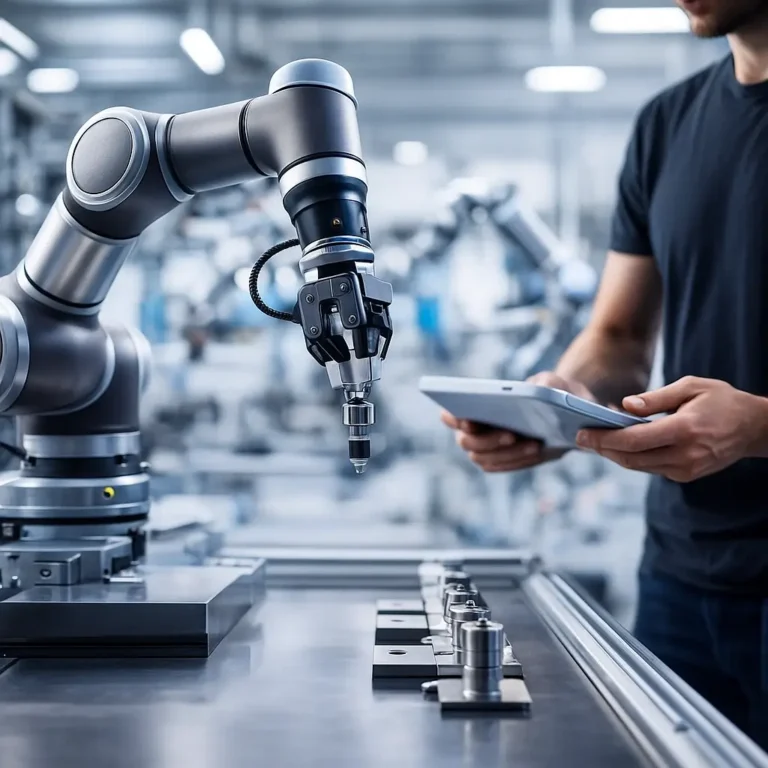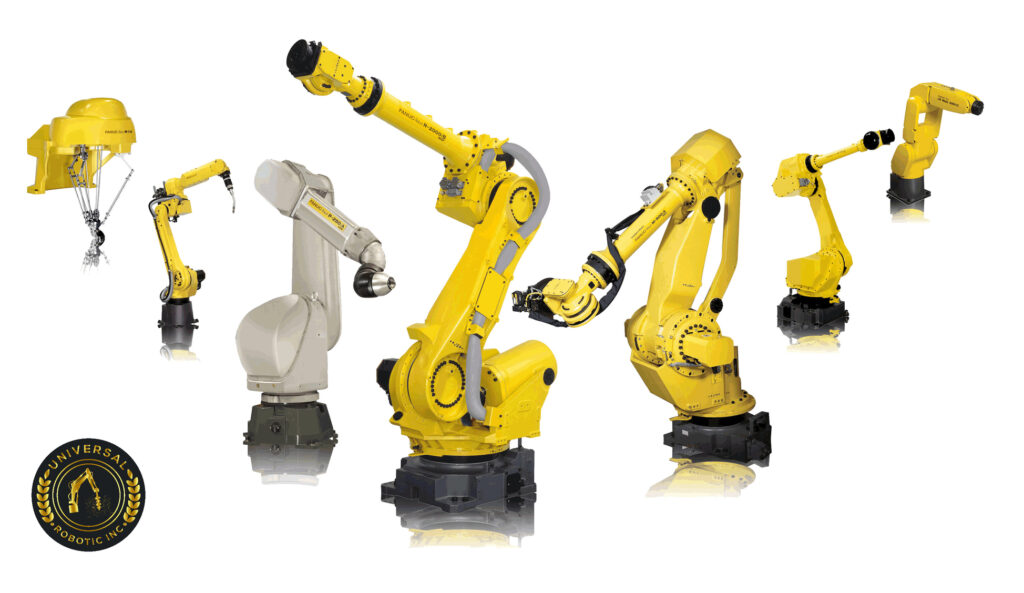
A mechanical (robotic) machine that is programmable to carry out manufacturing activities in industrial environments automatically is known as an industrial robot. Since industrial robots can be reprogrammed and used for many various types of robotic applications, they are considered a form of modular automation. Robots have become manufacturers’ favorite option for automation because they are highly successful in increasing production, delivering high-quality goods, and reducing costs.
Five major parts used in an industrial robot are a controller, sensors, a robotics manipulator, an end-effector, and an actuator.
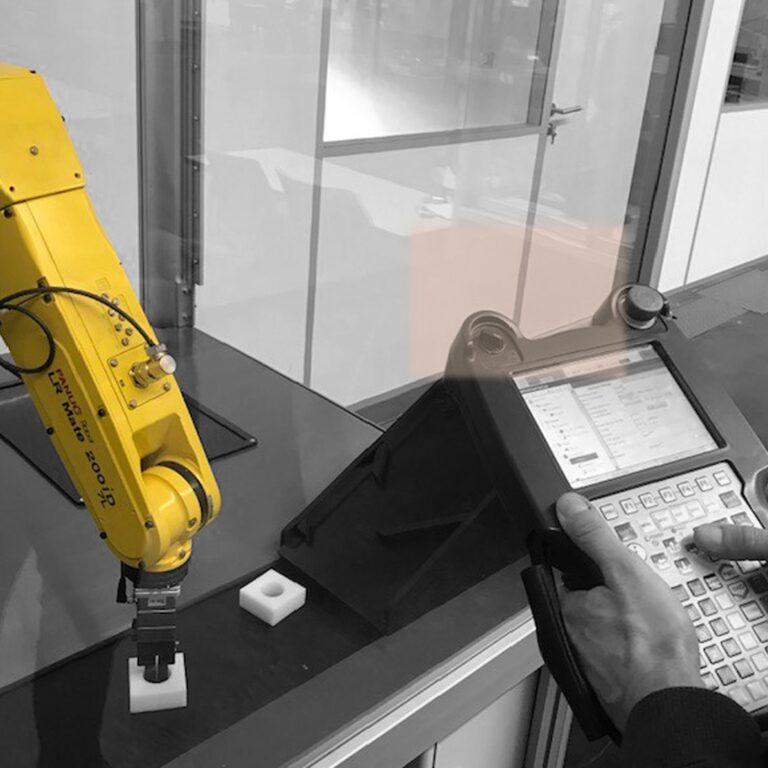
The robot controller is primarily the robot’s brain — a computing interface that tells the robot how to operate through coded software.
The FANUC R-30iA controller is an example of the controller used with robots like the
FANUC R-2000iB or FANUC Arc Mate 120iC.
In this post, we will discuss the uses of industrial robots across various applications. Below are ten major applications of industrial robots:
1. Arc Welding
Arc welding, or robot welding, became common in the 1980s.
Protecting staff from arc burns and toxic fumes was one of the main reasons industries began switching to robot welding.
2. Spot Welding
Spot welding is a type of electric resistance welding used to join metal parts through heat generated by electrical resistance at contact points.
Industrial robots perform this process faster and more efficiently than manual methods.
3. Material Handling
Robots transfer, pack, pick, and move items across production lines.
Material handling automation reduces labor costs and eliminates many repetitive or dangerous tasks.
4. Machine Tending
Machine tending involves robots loading and unloading industrial machines in manufacturing facilities.
This increases safety and improves machine throughput.
5. Painting
Painting robots improve finish quality, speed, and consistency in industries like automotive and consumer goods.
They also reduce rework and overall production costs.
6. Picking, Packing, and Palletizing
Products often need to be handled multiple times before shipping.
Robotic picking and packing increases speed, accuracy, and reduces labor costs.
7. Assembly
Robots are widely used in automated assembly lines, removing repetitive manual tasks.
They increase throughput and reduce operating expenses.
8. Cutting, Grinding, Polishing, and Deburring
Robots can perform precision finishing tasks that are difficult or time-consuming by hand.
For example, polishing orthopedic implants manually may take over an hour, whereas a robot can do it in minutes.
9. Sticking Fabrics and Sealing Methods
Sealing robots adapt to various product shapes thanks to flexible arm configurations.
They deliver superior quality, speed, and consistency compared to manual sealing.
10. Other Applications
These include inspection, waterjet cutting, and more.