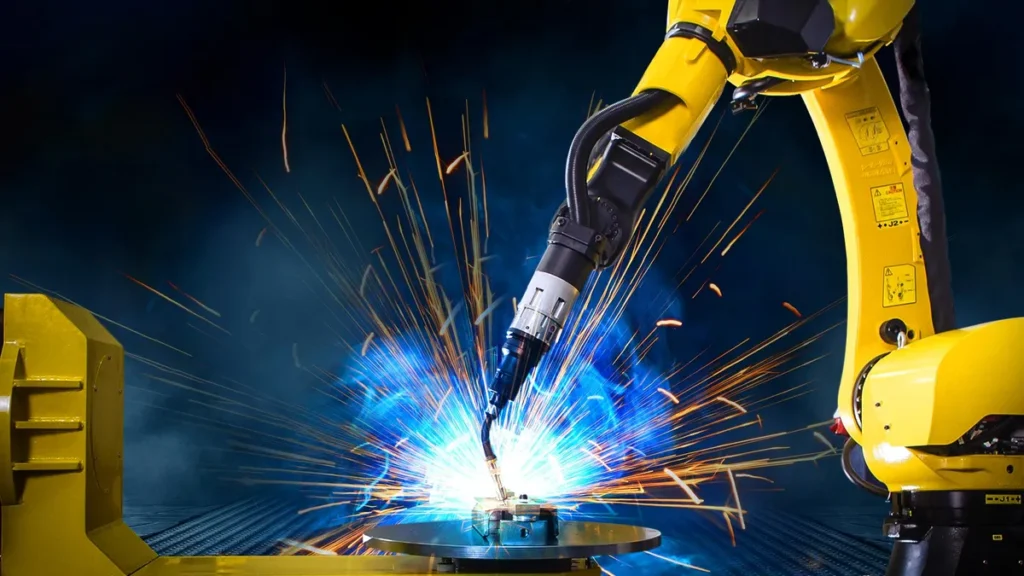
What Is Robotic Welding? A Complete Overview of Automated Welding Systems
Used robotic welding systems are transforming modern manufacturing by delivering faster, more precise, and more consistent welds than conventional manual methods. The process of robotic welding requires the mixing of heat and pressure of materials, usually metals. Mainly, manual welding was done until the 1980s when robots for automated spot welding were adopted in the automotive industry. Since then, robotic welding has continued to develop, with approximately 50% of today’s robots used for welding automation.
Welding robots provide more efficiency, consistency, and speed than the skill level of an experienced welder. As witnessed by welder retirements and the expanding welding skills gap among current workers, automation of welding processes is becoming even more important with industrial robots.
How Robotic Welding Works
Robotic welding means full automation with mechanical manipulation and robotic tooling programmed for handling and welding parts for a welding application. Robotic welding may also be known as automatic welding. Industrial robots can complete welds by pre-programmed paths, guidance from a robotic vision system, or a combination of both for more complicated applications.
The robotic manipulator’s controlled drives ensure accuracy and precision, producing durable, high-quality welds.
Robots Commonly Used for Welding
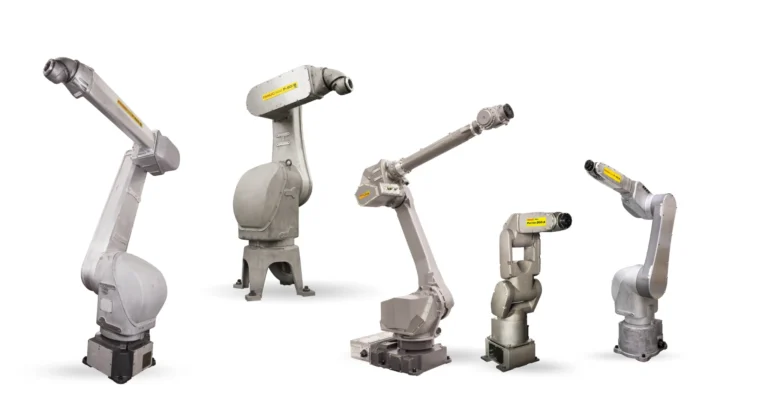
Most robots used for welding are six-axis robots. These articulated robots have a single-arm configuration capable of working from any angle because of their wide range of motion. Six-axis welding robots can weld large parts, reach difficult angles, or fit into narrow spaces.
A top option for manufacturers who want to automate a welding process is the FANUC ArcMate 120iC. For very large welds, gantry robots can also be used. They are suitable for operating on large workpieces with their track systems, but their range of motion is often limited compared to six-axis manipulators.
What You Need to Automate a Welding Process
To automate a welding process, more than just an industrial robot is needed. Welding robots should be equipped with:
- Welding power source
- Welding torch
- Wire feeder
- Positioners
- Reamer
All of these components can be contained in a single robotic work cell. Robotic cells provide a secure welding area that protects floor personnel from welding hazards. Workcells enable robots to operate at optimum productivity and efficiency.
Inside a Typical Robotic Welding Cycle
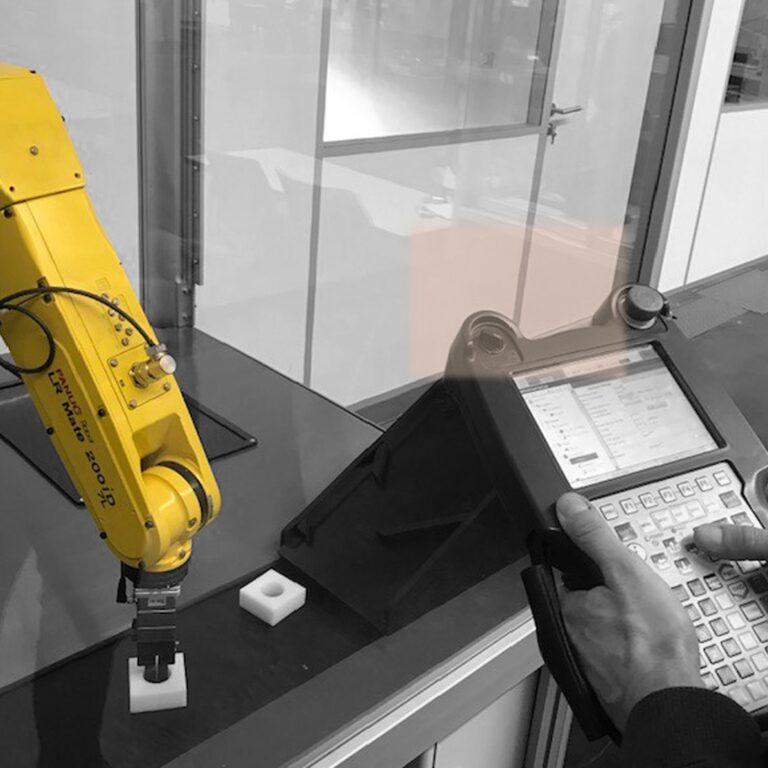
A typical robotic welding cycle is initiated and supervised by an operator. The operator usually begins by placing a workpiece at the loading station outside the cell. The workpiece is secured on the positioner. The operator then runs the desired welding program from the robot controller.
Once the robot picks up the torch, the welding process starts inside the work cell while the operator prepares the next workpiece. The reamer cleans the welding torch between parts when welding is complete. Robots commonly used in these cells include the ABB IRB 2600 and the FANUC Arc Mate 100iC.
The positioner rotates the preloaded piece and presents it to the robot for the next weld cycle. The operator then removes the completed workpiece from the unloading station.
Types of Robotic Welding Applications
The application of robotic welding can be divided into two categories: resistance welding and arc welding.
Resistance Welding
Resistance welding processes include spot welding, which is commonly used in automotive production. The FANUC R-2000iB is an example of a spot-welding-capable robot.
Arc Welding
Arc welding processes include MIG, TIG, FCAW, and plasma welding. The Motoman MA1400 is specifically built for arc welding automation.