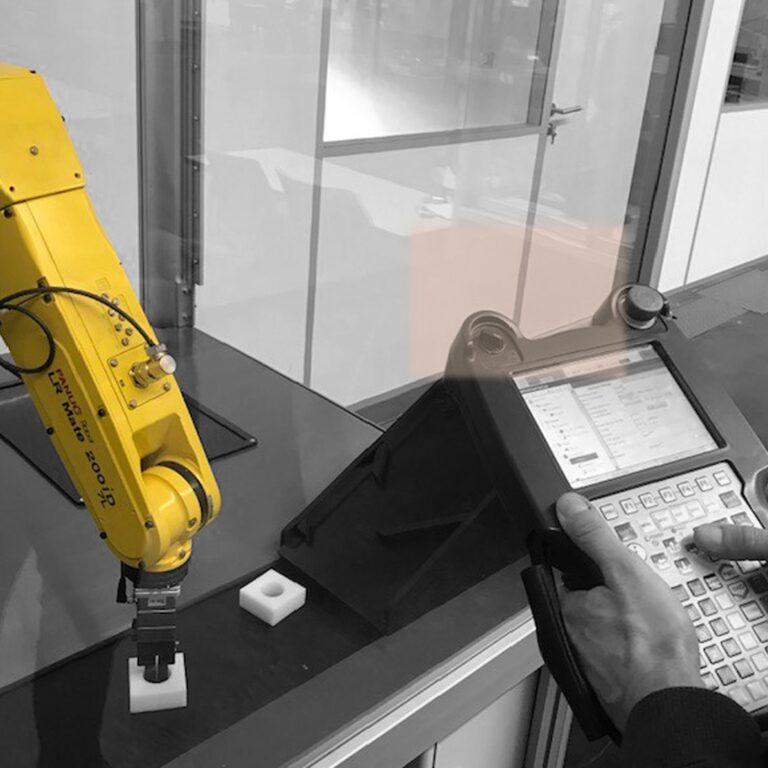
Does the development process involve introducing robotic automation? Here is a list of advantages that robotic automation can offer to consumers.
1. Low Prices
Robotic automation can immediately minimize operating costs. Industrial robots require no wages or benefits and can work three times longer than humans, reducing labor costs. The accuracy of six-axis robots reduces material waste and contributes to cost savings. Energy-efficient modern robots also reduce utility expenses.
2. Quick ROI
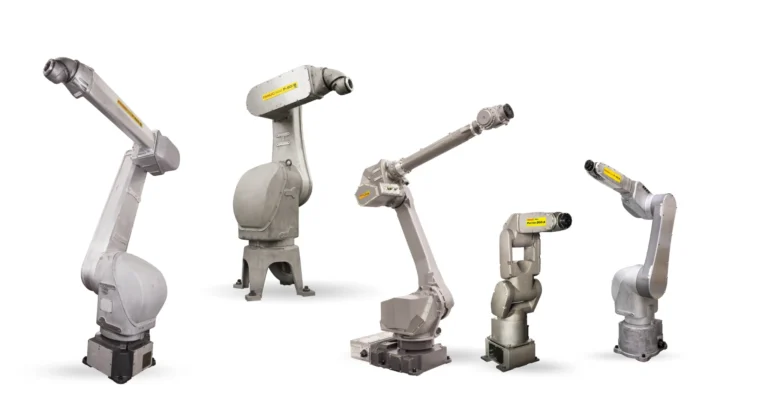
Some businesses hesitate due to upfront investment, but robots are one of the few assets that quickly pay for themselves. Reduced labor costs, faster production, and improved cycle times all accelerate ROI. The initial cost can be significantly reduced by choosing a used robot such as the FANUC LR Mate 200iC. Most FANUC robots for sale also include upgraded software or components, further improving ROI by lowering integration costs.
3. Increase Productivity
Robots operate at much higher speeds than human workers and can run 24/7 without fatigue. Parts move through the production process faster, dramatically increasing throughput. Offline programming capabilities allow manufacturers to adjust programs without interrupting live production.
4. Improve Product Quality
Consistent, high-quality production is essential for maintaining and growing a customer base. Robotic automation ensures precision and repeatability, eliminating defects and inconsistencies. For example, the FANUC 710iC can perform assembly operations with no variation from part to part.
5. Reduce Environmental Footprint
Industrial robots are environmentally friendly. They reduce scrap, optimize raw material usage, and require less factory space — lowering energy consumption. Robots also produce fewer contaminants and outperform many traditional industrial machines in efficiency.
6. Reliable Operation
Industrial robots are extremely reliable, capable of running thousands of hours before maintenance is required. Their predictable performance allows manufacturers to schedule production and estimate costs more accurately.
7. Solve Skills and Labor Gaps
Many manufacturing roles require specialized skills that are increasingly difficult to hire for. With an aging workforce and fewer young workers entering manufacturing, the skills gap continues to grow. Robotic automation fills both labor and skill shortages — robots can perform the same tasks as skilled workers thanks to precise programming.
8. Increase Versatility
Robotic automation is one of the most versatile forms of automation. Robots can be reprogrammed whenever production changes occur. They can handle different parts, materials, and tasks — especially when paired with a vision system. Robots often support multiple applications simultaneously. For example, the FANUC M-16iB can perform both material handling and robotic welding. This adaptability is invaluable in an era of short product life cycles.