Six-axis robots have become central to contemporary industrial automation with their flexibility and accuracy in a wide range of sectors. It is a guide exploring their functionality, advantages, uses, prices, and the top manufacturers, which will give a detailed insight into such robotic systems.
What is a Six-Axis Robot?
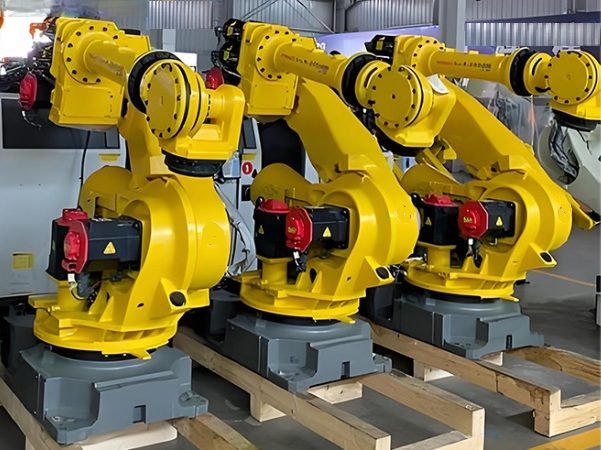
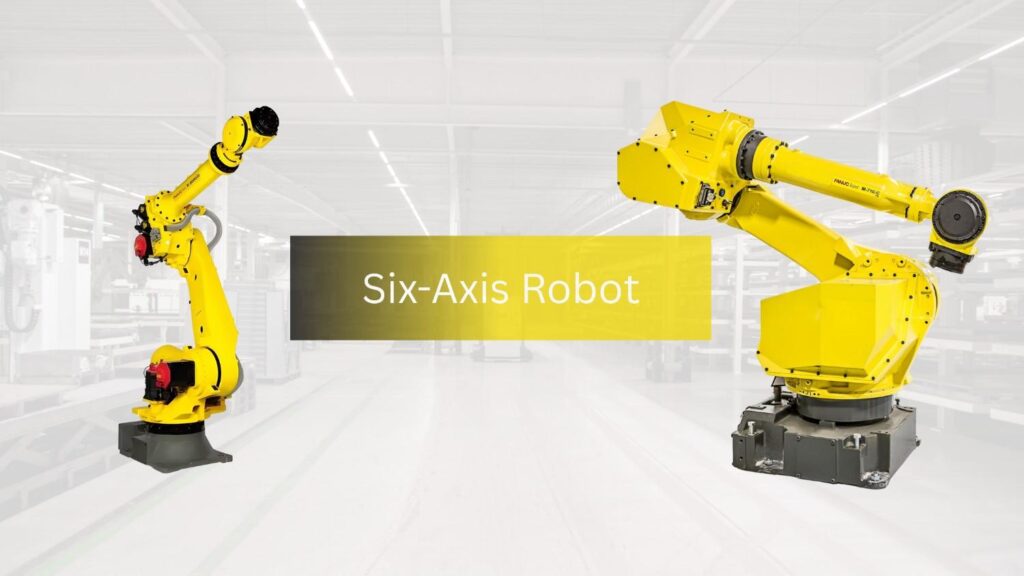
The six degrees of freedom robotic arm (ADO) is a six-axis robot, which is able to move with six degrees of freedom to create complex movements and make high-precision movements. Every axis is associated with a particular rotational motion, and the axis enables the robot to move its end effector (gripper or tool) to three-dimensional space. This configuration is similar to a human arm as it consists of a base rotation, shoulder, elbow, and wrist pitch and wrist yaw, and wrist roll. Six-axis robots are versatile and thus can be used in jobs that involve sophisticated tasks manipulation, assembly, welding, painting, and material handling. They are part and parcel of industries similar to automotive manufacturing, electronics, and consumer goods manufacturing.
Benefits
- Flexibility: Ability to do numerous types of work, such as assembly, painting.
- Precision: All repeat jobs are done with high accuracy and quality.
- Flexibility: Can be reprogrammed to achieve other applications easily, and it will save time.
- Safety: Minimizes human exposure to dangerous environments and improves the safety of the workplace.
- Efficiency: Makes the production faster and the cost of operation cheaper.
Drawback
- High Start-up: The start-up cost of purchasing and combining six-axis robots may be significant, which could be an obstacle to small to medium-sized enterprises.
How Six-Axis Robots Work?
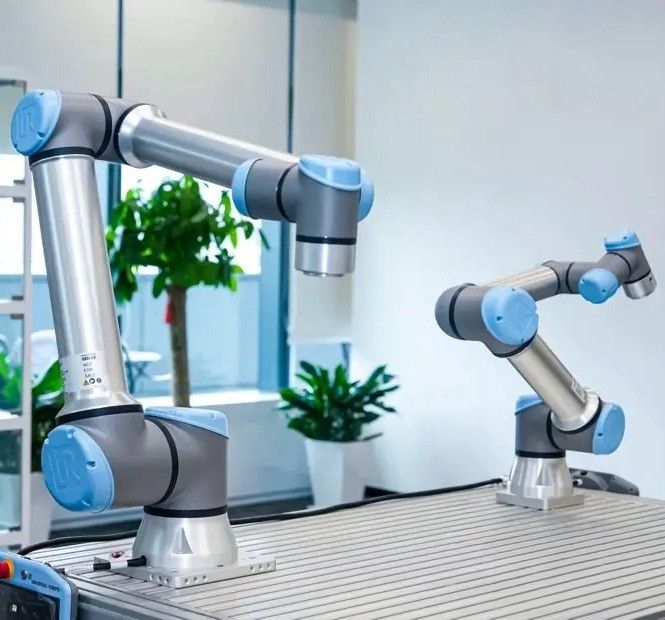
The six-axis robots are operated by a sequence of joints and actuators, which are linked together and controlled by a central processing unit. The movements of the robot are programmed with the help of coordinate systems and path development of planning algorithms to obtain preferred positions and orientations. The superior sensors and feedback mechanism give the accuracy and flexibility for different tasks. Introduction of force-torque the force-torque is integrated sensors enables the robot to do very delicate tasks, including assembly and inspection sensitivity.
Axis 1 (Base Rotation)
Shoulder joint or base rotation is the ability of the robot to rotate its arm about a given fixed-point base. This motion enables the robot to be in a circular path with its end effector in a horizontal plane. The scope of movement and speed of this axis is essential in activities that have extensive coverage and speed positioning. As an example, in material handling, the base rotation allows the robot to reach various sections of a workplace effectively.
Axis 2 (Lower Arm)
The lower arm or upper arm joint enables the robot to flex its arm high and low, stretching it or not withdrawing its reach in an upward direction. Tasks that involve the vertical positioning, like this axis, are necessary positioning elements on production lines or access to elevated or low-crowded spaces. The swiftness and accuracy of this movement play an essential role in ensuring the stability of performance in repetitive activities.
Axis 3 (Upper Arm)
The elbow joint or a higher arm allows the robot to establish a final effector nearer or further by bending the arm further from its base. This movement plays an essential role in operations that demand high accuracy in tool or parts placement, like welding or painting. The manipulation and the motility range around this axis permit the robot to fit to different angles and orientations and increase its versatility.
Axis 4 (Wrist Roll)
The wrist roll or yaw joint enables the robot to be able to move its wrist around its axis, allowing the end effector to turn left or right. Tasks that involve changing direction are necessitated by this movement as putting parts into place in slots, or so forth. The precision and the responsiveness of such an axis are vital in ensuring the quality and accuracy of operations.
Axis 5 (Wrist Pitch/Yaw)
The joints of the wrist pitch and yaw help the robot to tilt its wrist forward and back (pitch) and sideways (yaw), offering a number of choices of orientations of the final effector. These activities are crucial to activities that need elaborate positioning, e.g., painting or welding at angles. The ability to control this high accuracy requires the robot to use consistently high-precision axes to perform high-precision operations.
Axis 6 (Wrist Rotation)
Wrist rotation or wrist roll joint, it is the rotation of the robot about its axis, which allows the end to have its wrist rotated effector to left turn or right turn. The motion is critical in the activities that demand repositioning adjustments, as putting parts into place in slots, or so forth. The precision and the responsiveness of this axis a critical facets to continue the quality and accuracy of the operations.
Applications & Use Cases
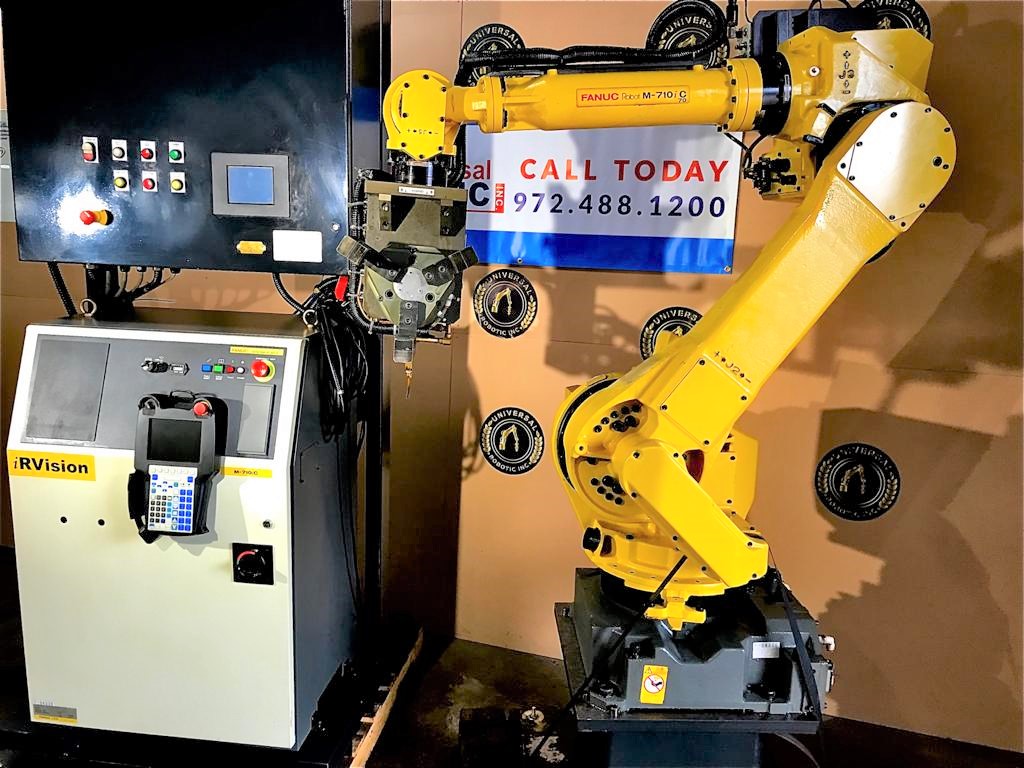
Six-axis robots find application in different sectors with flexibility and precision in many industrial applications.
Automotive Manufacturing
Six-axis robots have found use in automotive manufacturing to deal with welding, painting, and other tasks in assembly. The repetitive nature of their work and extreme accuracy guarantee quality, consistency, and productivity on the assembly lines. As an illustration, robots are able to do precision welding of car bodies, thus minimizing the human factor inaccuracy and growing through outputs.
Electronics Industry
Six-axis robots are used in the assembly, testing, and packaging of components in the electronics industry. They are also highly determined by their accuracy and speed to make them handle delicate electronic parts without damaging them. The miniature components on a circuit board can be precisely deposited by robots and guarantee the reliability of them electronic devices.
Welding Technology
Six-axis robots are applied in welding technology in spot welding and arc welding. Their precise ability to move and set the speed makes it possible to have uniform welds that minimize defects and enhance the product quality. Robots have the ability to make complex joints and angles that can be difficult for human welders, expanding the flexibility of welding jobs.
Material Handling
Material handling the six-axis robots are applied in material handling to sort, package, and transport goods. Their flexibility enables them to treat all types of materials, such as heavy components and sensitive objects, very attentively. Robotics can automate operations like palletizing and lower the costs of labor, as well as improve throughput.
Mechanical Processing
Six-axis robots are used in the mechanical processing process to mill, drill, and grind. Their precision guarantees machining of parts to specifications that result in minimized wastage and enhanced product quality. The presence of robots makes production rates and consistency more consistent since it enables the robot to work day and night.
How Much Does a 6-axis Robot Cost?
A 6-axis robot is available at different prices depending on the payload capacity, reach, accuracy, and other application-specific features. The cheapest entry-level models that are capable of working on lightly demanding tasks can begin at approximately 25000 dollars, where premium models used in heavy-duty applications might cost over $250 000. Additional costs include integration, programming, and maintenance, which may have a high influence on the overall investment.
Manufacturers & Industry Leaders
There are some manufacturers who are famous for the creation of quality six-axis robots, each with its own peculiarities, features, and capabilities.
FANUC
FANUC is one of the best in the production of industrial robots, with four models consisting of six-axis models, characterized by their reliability and precision. They have robots that are applicable in automotive and electronic industries, preparation like assembly, painting, and moving of materials.
ABB
ABB offers a wide range of six-axis robots, which are oriented to different applications such as welding to packaging. They have been known to have highly developed control systems with their robots, and are energy efficient them which can be used in various industries on high-precision tasks.
KUKA
KUKA has been able to provide various six-axis robots that are flexible and adaptable. Their robots are utilized in industries like automobile, aerospace, and consumer goods to engage in activities like assembly, painting, etc. material handling.
Motoman
Motoman, the branch of Yaskawa Electric Corporation, is focused on the six-axis robots that are much more efficient regarding high-performance speed operations. Their robots are usually applied where speedy movements are needed, e.g. product lines and packing lines.
Universal Robots
The specialization of Universal Robots is collaborative six-axis robots that work in safe conditions with human operators. Their robots are suitable for small and medium enterprises, as they are flexible and easy to operate task handling programs such as assembly and inspection.
Conclusion
Six-axis robots, robots built with six axes, are essential in industrial automation of the modern world and provide flexibility, accuracy, and productivity in different applications. It is imperative to know how they work, their advantages, and the cost to companies that are thinking about automation solutions. One can ensure the right choice of a robot and a manufacturer. Companies are able to increase their productivity as well as sustain a competitive advantage within their sectors.